
The Short Answer
- Lip filler is an injectable gel used to add shape, structure, symmetry, hydration, or volume to the lips. Most modern formulas are made with hyaluronic acid (HA), a substance also found naturally in the body.
- HA filler creates volume through the physical gel placed in the tissue and its ability to attract and retain water.
- HA lip filler can usually be reduced or dissolved with hyaluronidase if a clinical correction is needed, although dissolving is still a medical treatment rather than a perfect “undo” button.
- Swelling is often most noticeable during the first 24–48 hours. Most lips look substantially more settled by one week, with the clearest view of the result at about two weeks.
- Results vary by product, anatomy, dose, placement, and metabolism. Aesthetic Collective advises that its lip filler results commonly last about 6–8 months.
See what a natural, conservative result could look like on you with a free consultation.
Book Your Free ConsultationWhat Is Lip Filler?
The part many first-timers do not realize is that modern lip filler is usually temporary and adjustable. It is not the permanent, one-way decision people sometimes picture when they hear “lip injections.” Most treatments use hyaluronic acid gel, which gradually breaks down over time and can often be dissolved sooner when medically appropriate.
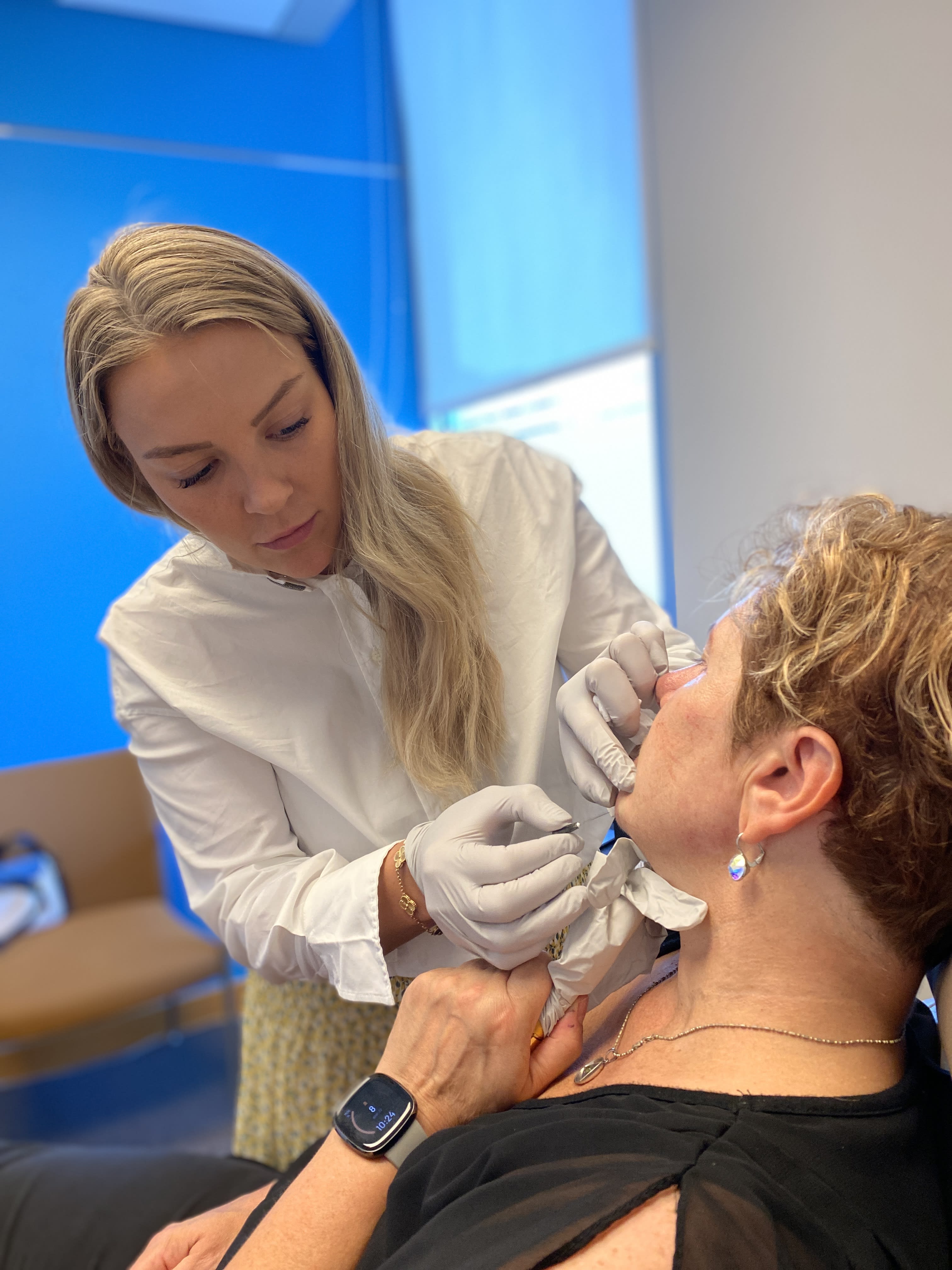
So, what is lip filler? Lip filler is an injectable gel placed in carefully selected areas of the lips to add support, definition, symmetry, hydration, or volume. The goal does not have to be dramatically larger lips. A conservative treatment may focus on sharpening the border, supporting the corners, balancing the upper and lower lip, or correcting a small asymmetry that only shows when you smile.
“Lip injections” is the broader umbrella term. Lip filler is one type of lip injection. A lip flip is another, but it uses a neuromodulator such as Botox, Dysport, or Jeuveau around the upper lip rather than placing volume inside the lip. The treatments can sometimes complement each other, but they do different jobs.
At Aesthetic Collective in Plano, lip filler is approached as a facial-balancing treatment. Our injectors start conservatively, assess the lips both at rest and in motion, and build a plan around the result that suits your face—not a trend, a filter, or a preset syringe count.
What Is Lip Filler Made Of?
Most modern lip fillers are made of cross-linked hyaluronic acid gel. Many formulas also contain lidocaine, a local anesthetic included to reduce discomfort during treatment. The exact inactive ingredients, HA concentration, and gel technology vary by brand and product, so your injector should be able to tell you exactly what is being recommended.
The Main Ingredients
| Ingredient | What It Does | Where It Comes From |
|---|---|---|
| Cross-linked hyaluronic acid (HA) | Creates a soft gel that adds structure and volume; HA also attracts and retains water within the gel and surrounding tissue. | HA is a sugar molecule found naturally in the body. Injectable HA is manufactured under controlled conditions and modified to last longer in tissue. |
| Lidocaine (in many modern formulas) | Reduces injection discomfort from within the product as it is placed. | A local anesthetic is added to the filler; it is not the ingredient that creates volume. |
| Sterile buffer and salts | Keep the product stable and compatible for injection. | Product-specific inactive ingredients listed in the manufacturer’s labeling. |
The word “cross-linked” matters. Natural, unmodified HA is broken down quickly. Cross-linking connects the HA chains into a more durable gel network, allowing the material to retain its shape and resist rapid degradation while remaining biodegradable. Different cross-linking methods and gel properties help explain why one filler may feel softer, provide more structure, or move differently from another.
What Lip Filler Is Not Made Of
Modern HA lip filler is not liquid silicone, a lip implant, snake venom, or a permanent plastic material. It is also different from older animal-derived collagen fillers that sometimes required allergy testing. The aesthetics field has used many materials over the decades, and some of the frightening stories people remember involve older or nonapproved products rather than the HA gels commonly used for lip enhancement today.
That does not mean all fillers are interchangeable or risk-free. Ask which product will be used, whether it is appropriate for the lips, and why it fits your anatomy and goals. You can review our lip filler options before your consultation.
How Does Lip Filler Work?
Lip filler works through three things at once: where the injector places it, the physical structure of the gel, and hyaluronic acid’s relationship with water. The intended volume is not simply post-treatment swelling. The gel itself occupies space and supports the tissue; temporary inflammation sits on top of that result for the first several days.
Need a deeper dive on the prices? Do check out our guide on lip filler costs in and around Plano, Texas.
Why Hyaluronic Acid Specifically?
- A small amount of HA gel is injected into a targeted area, such as the lip body, border, Cupid’s bow, central tubercles, or an area of asymmetry.
- The cross-linked gel creates physical support and controlled volume where it is placed.
- HA attracts and retains water, helping the gel stay hydrated and integrate with the surrounding tissue rather than behaving like a rigid implant.
- Over time, the body gradually breaks the HA gel down. If a correction is clinically appropriate, hyaluronidase can be used to accelerate the breakdown of HA filler.
That fourth point matters more than most explanations give it credit for. Reversibility exists because an enzyme called hyaluronidase breaks down HA specifically, the same way it would break down the HA your body already makes. Reviews of HA filler safety describe this biocompatibility and reversibility as the core reason HA became the dominant filler material over older, non-reversible alternatives.
Reversibility follows from the material itself. Hyaluronidase breaks down hyaluronic acid, so it can be used when HA filler needs to be reduced urgently or electively. Still, dissolving may require more than one treatment and can temporarily create more swelling. It is a valuable safety and correction tool, not a reason to treat product choice or injector skill casually.
Placement Matters as Much as Amount
A syringe is a measurement, not a design. The same 1 mL can look completely different depending on the product, the patient’s starting anatomy, and where the gel is placed. That is why asking for a celebrity’s lips or insisting on a fixed amount is less useful than explaining what you want to change.
- Lip body placement can add fullness and improve the balance between the upper and lower lip.
- Border placement can improve definition, but too much superficial product may create stiffness, a visible shelf, or migration above the lip line.
- Cupid’s bow and central placement can refine shape without making the entire lip look dramatically larger.
- Targeted placement may improve asymmetry, although perfectly identical lips are not a realistic promise because facial anatomy and movement are naturally uneven.
- Sometimes the best plan is to use less filler, stage treatment over multiple visits, dissolve old products first, or recommend a lip flip instead of adding more volume.
That last point is worth emphasizing. Restraint is not a lack of skill. Knowing when not to fill—and when to stop—is part of achieving a result that still looks like you.
Lip Filler vs. Lip Flip
Lip filler places HA gel inside the lips, so it can add actual volume, shape, support, and definition. A lip flip uses a small amount of neuromodulator around the upper lip to soften the muscle action that rolls the lip inward. A flip may allow more of the upper lip to show when you smile, but it does not add volume or sculpt the lip the way filler can. The right option depends on whether your concern is tissue volume, shape, muscle movement, or a combination of the three.
If you're still weighing lip filler against a different treatment entirely, it's worth browsing our full range of services before locking in a plan.
What to Expect: Your Lip Filler Recovery Timeline
The first look in the mirror is not the final result. Lips have a rich blood supply, move constantly, and swell easily. They can look uneven, firmer, or much fuller than expected during the first few days. That temporary “swelling shock” is common, and being honest about it is kinder than pretending every patient leaves looking perfectly settled.
Day by Day
| Timeframe | What You May Notice | What It Usually Means |
|---|---|---|
| Day 0–1 | Swelling begins; lips may look overfilled or uneven. Mild numbness, tenderness, redness, and tiny injection marks are possible. | Early inflammation is sitting on top of the intended filler result. Avoid judging symmetry or volume yet. |
| Day 2–3 | Swelling is often at or near its peak. Bruising may become more visible, and the lips can feel firm or lumpy. | This can be the most visually dramatic phase even when the treatment is healing normally. Follow your injector’s aftercare instructions. |
| Day 4–7 | Swelling usually drops substantially—often by roughly half or more. Bruising fades and the shape begins to look more natural. | Small differences may continue to change as the tissue settles. Do not massage unless your injector specifically instructs you to. |
| Week 2 | The lips are generally softening and the final shape and size are much easier to assess. | This is the more useful point for evaluating the result or attending a scheduled review. |
| Months 6–12 | The result gradually softens as the body metabolizes the HA gel. | Longevity varies. Aesthetic Collective advises that lip filler commonly lasts about 9–12 months, but individual results differ. |
How long does lip filler swelling last? The most obvious swelling usually improves within several days, although mild residual puffiness or firmness may take up to two weeks to fully settle. Contact your provider promptly for severe or worsening pain, skin that becomes pale, dusky, or mottled, unusual coolness, spreading redness, fever, vision changes, or any symptom that feels distinctly wrong rather than simply swollen.
How long does lip filler last? Aesthetic Collective’s service guidance places typical results around 6–9 months. Some people metabolize filler faster; some retain visible product longer. Product choice, amount, injection plane, lip movement, and prior treatment history all affect longevity.
Making the First Week Easier
Your injector’s instructions take priority because aftercare can vary with the product, technique, and your medical history. In general, the first week is less about doing something dramatic and more about avoiding unnecessary swelling, bruising, or pressure while the tissue settles.
- Use a wrapped cold pack for short intervals if your provider recommends it; do not press hard on the lips.
- Avoid strenuous exercise, excessive heat, saunas, and very hot showers during the initial recovery window recommended by your injector.
- Do not massage, squeeze, or repeatedly check for lumps unless you have been specifically shown how and when to do so.
- Plan filler well before weddings, photographs, travel, or other important events. Two weeks is a practical minimum for settling, and more time gives bruising or an unexpected response room to resolve.
- Contact the clinic rather than crowdsourcing urgent symptoms online. Severe pain, color change, cool skin, vision symptoms, or rapidly worsening swelling should be assessed promptly.
It is also normal for one side to settle slightly faster than the other. The urge to compare the lips every hour is understandable and almost never useful. Take a clear photo in consistent lighting, follow the plan you were given, and wait until the review point unless a warning sign appears.
Does Lip Filler Hurt?
Lips are sensitive, so lip filler is not completely painless. The honest description is a series of quick pinches, pressure, and occasional sharper moments in more sensitive areas. Most appointments use topical numbing, and many HA fillers contain lidocaine, so the sensation usually becomes easier as treatment continues.
The reassuring part is that the injections are brief and the discomfort is predictable. Tenderness afterward generally feels more like a bruised or swollen lip than ongoing needle pain. Tell your injector if you are anxious, prone to fainting, or need a pause. A good provider would rather slow down than have you white-knuckle the appointment.
Is Lip Filler Safe?
Lip filler is generally considered safe when an appropriate product is administered by a qualified medical professional who understands facial anatomy and complication management. “Generally safe,” however, does not mean risk-free.
Common short-term effects include swelling, bruising, tenderness, redness, temporary firmness, and mild asymmetry while the lips heal. Less common issues include infection, persistent lumps or nodules, reactivation of cold sores, prolonged swelling, migration, and dissatisfaction with shape or volume.
The rare but serious risk is vascular occlusion, which occurs when filler enters or compresses a blood vessel and interrupts blood flow. It requires urgent recognition and treatment. This is why provider selection should be based on medical training, anatomy knowledge, product authenticity, sterile technique, and emergency readiness—not simply the lowest price or the most dramatic social-media portfolio.
Before treatment, disclose medications and supplements, allergies, prior filler, dental work, recent illness or vaccination, pregnancy or breastfeeding status, autoimmune conditions, and any history of cold sores. Your provider may recommend postponing treatment or taking preventive antiviral medication in certain situations.
A conservative plan also improves safety and predictability. You can always reassess after swelling resolves. You cannot make overfilled, freshly treated lips settle faster because an event is tomorrow.
Anatomy knowledge matters more than the brand on the syringe. Come see who's actually doing your treatment.
Book Your ConsultationFrequently Asked Questions
Ready to Talk Shape, Not Just Size
Reading about hyaluronic acid is one thing. Figuring out how much volume and what shape actually suits your face is a conversation, not a spec sheet, and it's one worth having before anything gets injected.
Book a consultation and we'll go over which options make sense for you. That's how we approach every treatment at our Plano med spa, and it's the same standard patients get at our Frisco location: start with what you actually want your lips to look like, then work backward to the product and technique that gets you there.
Bring reference photos if you have them. We'll build a plan around your actual lips, not a generic chart.
Book Your Consultation
