
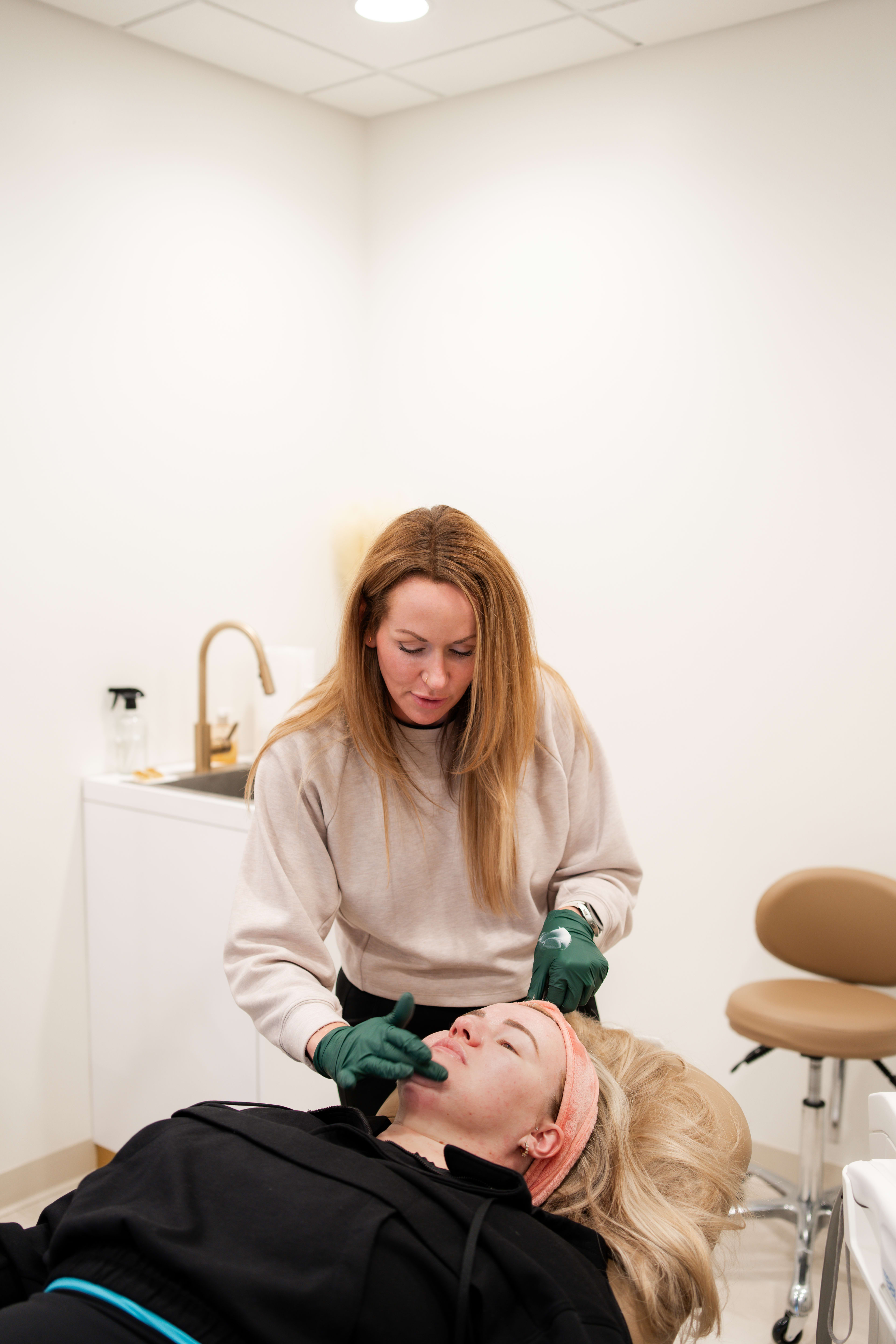
The Short Answer
- A chemical peel works from the top down: a carefully selected exfoliating solution removes damaged outer skin cells so fresher, healthier skin can take their place.
- Microneedling works from the inside out: fine, sterile needles create micro-channels that prompt your skin to rebuild its own collagen and elastin.
- Peels tend to shine for surface concerns — tone, pigmentation, dullness, and clogged pores — while microneedling is the stronger tool for structural concerns like acne scars and skin texture.
- Neither is universally better; the right choice depends on your skin type, your main concern, and how much downtime fits your life.
- The two are often combined in an alternating treatment plan — and a skin assessment with a qualified provider is the fastest way to find your answer.
Bring your skin concerns to our Plano med spa and get an honest recommendation — peel, microneedling, both, or neither.
Book a Free ConsultationMicroneedling vs. Chemical Peel: What's the Difference?
Microneedling and chemical peels sit next to each other on nearly every med spa menu, treat an overlapping list of concerns, and cost roughly the same per session — so it's no surprise they're the two treatments patients most often weigh against each other. But under the surface, they could hardly be more different: one resurfaces skin chemically from the top down, the other signals your skin to repair itself from within.
That difference in mechanism is what should drive your choice. At Aesthetic Collective in Plano, both chemical peels and microneedling are performed by medical skincare professionals who match the treatment — and its intensity — to your skin rather than to a trend. Here's the plain-English version of how each one works, where each one wins, and when the honest answer is both.
What Does a Chemical Peel Do?
A chemical peel is a controlled exfoliation. Your provider applies an exfoliating solution — the specific acids and strength are chosen for your skin type and goals — which loosens the bonds holding dull, damaged cells to the surface. Over the following days those cells shed, and the fresher skin underneath takes over: typically smoother, more even in tone, and brighter. Peels range from gentle lunchtime treatments with little visible flaking to deeper medical-grade peels with several days of peeling, which is why the same word covers such a wide range of experiences.
Peels earn their keep on surface-level concerns: uneven skin tone, sun-related pigmentation, dullness, rough texture, congested pores, and active breakouts. Because the depth is adjustable, a well-chosen peel can help almost any skin — the key word being chosen, since picking the wrong strength or acid for your skin type is how peels get their scary reputation.
How Often Should You Get a Chemical Peel?
For lighter peels, every four to six weeks is a common cadence — roughly aligned with your skin's natural renewal cycle. Deeper peels are spaced further apart and repeated less often. Your provider will set the interval based on how your skin responds, which is one more reason a peel plan should live with a consistent skincare professional rather than a different menu every month.
What Does Microneedling Do?
Microneedling takes the opposite approach: instead of removing the surface, it works beneath it. A medical-grade device creates thousands of precise micro-channels in the skin, which your body reads as a repair order — responding with fresh collagen and elastin, the structural proteins that keep skin smooth, firm, and resilient. The needle depth is customized to the concern being treated, from fine lines to deeper scarring.
Because it rebuilds structure rather than just refreshing the surface, microneedling is the stronger tool for concerns that live deeper: acne scars, enlarged pores, fine lines, and stubborn rough texture. Results build gradually over a series of sessions as new collagen matures — we covered the full first-timer experience, numbing and healing timeline included, in our microneedling for acne scars guide.
Microneedling vs. Chemical Peel, Side by Side
| Chemical Peel | Microneedling | |
|---|---|---|
| How it works | An exfoliating solution removes damaged outer cells — resurfacing from the top down. | Micro-channels trigger your skin to rebuild collagen and elastin — repair from within. |
| Best suited for | Tone, pigmentation, dullness, congested pores, active breakouts. | Acne scars, texture, fine lines, enlarged pores. |
| What it feels like | Tingling or warmth while the solution is on the skin. | Numbing cream first; most patients describe light pressure or mild scratchiness. |
| Downtime | Varies by depth — from almost none to several days of visible peeling. | Typically 24–48 hours of redness, like a mild sunburn. |
| When results show | As soon as peeling finishes — days, for most light and medium peels. | Gradually over weeks as new collagen builds; best after a series. |
| Typical plan | A series of peels spaced about 4–6 weeks apart. | A series of 3–6 sessions spaced about 4–6 weeks apart. |
A quick skin assessment tells you which treatment actually fits your concerns, your skin type, and your calendar.
Schedule Your Skin ConsultWhich Is Better for Acne Scars?
This is the most common tiebreaker question, and it has a genuinely useful answer: it depends on what your acne left behind. For discoloration — the flat red or brown marks that linger after breakouts heal — a chemical peel for acne scars is often the efficient choice, since those marks live in the surface layers a peel resurfaces. For textural scarring — the rolling, pitted, or indented scars you can feel — microneedling usually wins, because indented scars are a collagen deficit, and microneedling is a collagen-building treatment. Many patients have both kinds at once, which is exactly when a combination plan earns its place. Individual results vary, and a provider who examines your skin in person can tell you honestly which camp you're in.
Can You Do Microneedling and a Chemical Peel Together?
Yes — just not on the same day. Because the two treatments work on different layers by different mechanisms, they complement each other well in an alternating plan: microneedling builds structure from within while periodic peels keep the surface clear, bright, and even. A common approach rotates the treatments a few weeks apart so your skin fully recovers between sessions. Sequencing, spacing, and strength are clinical decisions your provider makes based on how your skin responds — not a package pulled off a shelf.
How to Choose the Right Treatment in Plano
Start with your mirror, not the menu. If what bothers you is color — dark spots, post-breakout marks, overall dullness — lean peel. If what bothers you is what you can feel — scars, rough texture, early lines — lean microneedling. If it's both, or you're not sure, that's not a failure of research; it's precisely the question a skin assessment exists to answer. Factor in downtime too: a deeper peel's visible flaking is easy to plan around when you know it's coming, and microneedling's day or two of redness fits neatly before a weekend.
The provider matters as much as the pick. Both treatments are adjustable — peel strength, needle depth — and those adjustments are where results and safety live, especially for deeper skin tones, where an ill-chosen peel can cause the very pigmentation it was meant to fix. Aesthetic Collective's medical skincare team treats patients from across Collin County, including Prosper, and the process always starts the same way: an honest look at your skin before anything is booked. You can browse our full range of services to see how both treatments fit into a broader skin plan.
Frequently Asked Questions
Two Different Tools, One Honest Answer
Peel or microneedling isn't really a rivalry — they're different tools for different layers of the same skin. The useful question is which concern bothers you most, and the fastest route to that answer is ten minutes with a skincare professional who's actually looking at your face instead of a product menu.
Book a consultation at our Plano med spa and we'll assess your skin honestly — including telling you if the better plan is a peel, a microneedling series, an alternating combination, or something else entirely. That's how Aesthetic Collective approaches every treatment we offer.
No preset packages, no pressure — just a clear answer on which treatment your skin actually needs.
Book Your Consultation